
The 15-pound rule didn’t just lower a threshold. It put millions of previously unregulated systems under federal oversight, and the equipment owners responsible for them aren’t ready. Adam Dykstra breaks down what the rule actually requires, where states are already operating on tighter timelines, and why the contractors who treat compliance as a service are the ones positioned to grow through it. Read it below:
The 15-Pound Rule Changed the Game. Are You Ready for What Comes Next?
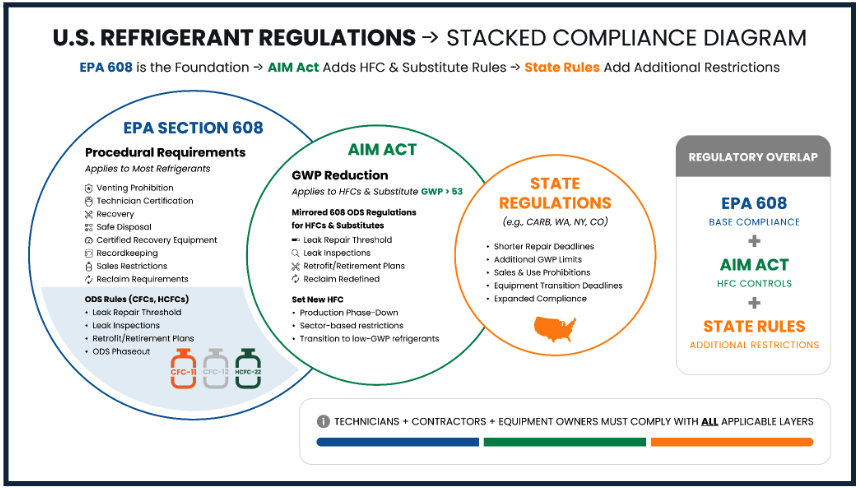
On January 1, 2026, the EPA’s Emissions Reduction and Reclamation rule went into effect under the AIM Act, and with it came a shift that commercial contractors can’t afford to ignore. The new federal leak repair requirements now apply to any commercial appliance containing 15 pounds or more of an HFC refrigerant (or substitute) with a global warming potential above 53.
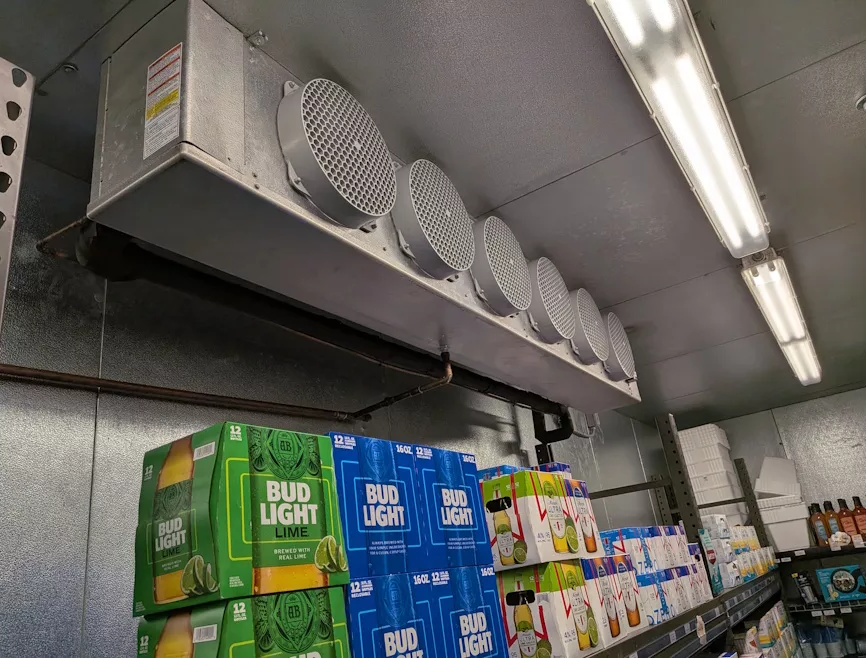
That’s a significant drop from the 50-pound threshold contractors have operated under for decades through Section 608. Systems that were never on anyone’s compliance radar are now fully regulated. Walk-in coolers, medium-duty display cases, rooftop units serving commercial spaces; if they hold 15 pounds or more in an individual circuit they’re in the program. That amounts to a massive expansion of equipment owners and systems now under federal oversight.
What the Federal Rule Requires
When a technician adds refrigerant to a covered system, the equipment owner must calculate the leak rate. If that rate exceeds the applicable threshold (10% for comfort cooling, 20% for refrigeration, and 30% for industrial process), the clock starts: identify and repair the leak within 30 days, conduct an initial verification test within that same window, then complete a follow-up verification test within 10 days of the initial. Fail to make a verified repair, and the owner is looking at a mandatory retrofit or retirement plan within 30 days of that failure. There’s no “fix it next time we’re out there” option anymore.
For contractors servicing commercial refrigeration, this means every charge event on a system 15 pounds and up is a potential compliance trigger. Documentation isn’t optional; it’s the difference between a routine service call and the beginning of a regulatory timeline that, left unmanaged, leads to forced equipment replacement.
Leak Rate Thresholds: Federal EPA vs. Washington
| Equipment Type | EPA | WA |
| Comfort Cooling / AC | 10% | 8% |
| Retail Food Refrigeration / Cold Storage | 20% | 16% |
| Industrial Process Refrigeration | 30% | 24% |
Source: 40 CFR §84.106(c)(2) & WAC 173-443-155(3)

The States Aren’t Waiting

Here’s where it gets interesting for contractors operating in multiple states, or even for those paying attention to where the regulatory trend is heading: several states have already imposed leak repair timelines that are significantly tighter than the federal standard.
California, Washington, and New York all require leak repairs to be completed within 14 days of detection on systems with 50 or more pounds of high-GWP refrigerant. That’s less than half the federal window. And the consequences for missing that deadline aren’t subtle. In all three states, a failed repair within the required timeframe can trigger a mandatory retrofit or retirement plan. Washington requires notification to the Department of Ecology each time refrigerant is added to a system that’s already above its leak rate threshold. Washington’s leak rate thresholds start lower too – 8% for comfort cooling, 16% for refrigeration and 24% for industrial process. New York and California both require five years of recordkeeping, compared to the federal three-year minimum.
The trend is clear. States are not waiting for the EPA to tighten timelines or handle enforcement; they’re doing it themselves. Contractors who build their workflows around tools that manage variable compliance regulations or choose to follow the strictest applicable standard today won’t have to scramble when the next state adopts similar rules, or when the federal standard inevitably tightens yet again.
The Compliance Burden Is the Business Opportunity
Most contractors look at compliance and assume the EPA is too busy to come knocking. The numbers say otherwise. Equipment owners have absorbed roughly $100 million in EPA penalties — 87% of all enforcement costs in the industry. Contractors have taken 41 enforcement actions of their own, totaling $2.7 million. The audits are happening. The penalties are real. And the equipment owners writing those checks are now sitting on millions of newly regulated systems they don’t know how to track.
The 15-pound threshold just made the problem bigger. Equipment owners are now sitting on millions of newly regulated systems they don’t know how to track, with most of them lacking the systems, the staff, or the regulatory knowledge to do it.
That’s your opening.
Contractors who can offer integrated compliance tools that connect the technician in the field, the contractor’s back office, and the equipment owner / facility manager in a single, shared workflow are positioned to deliver something far more valuable than a repair. They’re delivering regulatory peace of mind. The service call becomes the starting point of a compliance relationship, not just a transaction.
Think about what that means for your business. Every charge event is documented automatically. Leak rates are calculated in real time. Repair timelines are tracked. Verification tests are logged and accessible to the owner. When the EPA or a state agency asks for records, the answer is already in the system.
That kind of client integration doesn’t just protect the equipment owner; it makes you indispensable to them. It increases the value of every service agreement, creates recurring revenue around compliance management, and builds a relationship that’s difficult for a competitor to displace. You’re not just the contractor who fixes the leak. You’re the one in the room when the auditor shows up.
The Bottom Line
The regulatory landscape is getting more complex, not less. The 15-pound threshold brought millions of additional systems under federal oversight. State programs in California, Washington, and New York are already operating on tighter timelines with heavier documentation requirements. More states will follow.
The contractors who thrive in this environment won’t be the ones who see compliance as “just” paperwork. They’ll be the ones who see it as a service, and build their business around delivering it.
Read the full article here: Leak Rules Tighten as Threshold Drops to 15 Pounds by Adam Dykstra
Subscribe to The ACHR NEWS to stay informed about industry trends, regulations, & more.
Adam Dykstra is currently the COO of FMHero, a compliance technology platform serving the HVAC/R industry and original co-founder of Rapid Recovery. He can be reached at [email protected] – request a personalized demo of the FMHero platform https://www.fmhero.com/book-a-demo/.